Advanced Aesthetics • Tufnell Park, London
Full Face Regeneration
with Dermal Fillers
A comprehensive, doctor-led guide to aesthetic filler treatment across every zone of the face, from the temples to the jawline. Understand exactly how each area is treated, what results to expect, and the honest risks involved.
The Approach
A strategy, not just a treatment
Full face regeneration treats the face as a single cohesive canvas. Rather than filling individual lines in isolation, a structured approach restores the bone support first, rebuilding lost volume in the upper and mid-face, before refining surface features.
Filler is used to improve the transition between the upper, mid, and lower face, creating a more harmonious and youthful appearance.
This reduces the total product required, produces natural outcomes, and avoids the overfilled appearance that comes from addressing symptoms rather than causes.
The first visible signs of facial ageing often begin in the mid-face, where structural changes lead to volume loss. One of the key contributors is gradual bone resorption, particularly in the cheekbones and upper jaw, which reduces support for the overlying soft tissues.
Restoring this lost bone support is a fundamental principle of facial rejuvenation. Deep filler placement directly onto the bone using a needle allows for precise supraperiosteal injections, helping to recreate facial projection, restore support, and achieve a natural-looking lift.
Medical consultation first
Every treatment starts with a thorough medical history review, facial anatomy assessment, and a fully informed consent process.
Staged, not rushed
Treatment is often phased across sessions to allow accurate assessment, gradual enhancement, and time for informed decision-making.
Bone support before refinement
Bone areas include temples, cheeks, and chin are prioritised before crease lines and surface features are addressed.
Hyaluronic acid fillers
Premium, reversible hyaluronic acid products are selected per area for their specific firmness, lift, and flow characteristics.
What to Expect
How a full face filler appointment works
From consultation to aftercare, each stage is designed around your safety and comfort.
Medical consultation
Your medical history, medications, allergies, and aesthetic goals are reviewed. Photographs are taken and a customised treatment plan is documented.
Facial mapping
Key anatomical landmarks, blood vessel locations, and support zones are mapped on your face to guide safe injection technique and product placement.
Topical anaesthetic
A topical numbing cream is applied to all treatment areas and allowed to take effect, maximising comfort during the procedure.
Filler placement
Precise micro-deposits of filler are placed using needle or cannula techniques depending on the area and risk profile. Product is moulded as needed.
Post-treatment review
Treated areas are reviewed immediately after injection. Ice packs are applied to reduce swelling and you are assessed before leaving the practice.
Aftercare & follow-up
Written aftercare instructions are provided. A follow-up review is scheduled to assess final results and determine whether any refinement is needed.
Area-by-Area Clinical Guide
Facial treatment areas in detail
Expand any area below to read a detailed description of the procedure, the expected benefits, and the associated risks.

Temple hollowing is one of the earliest and most visually significant signs of facial ageing, yet it is frequently overlooked. As the temporal fat pad diminishes, the skin overlying the temple thins and retracts, creating a visible concavity that widens the apparent width of the skull and ages the upper third of the face. Restoring temple volume helps frame the eye, soften the brow tail, and rebalance the overall proportions of the face.
- Topical anaesthetic applied and allowed to work fully before treatment begins.
- Filler is placed in the deep temporal fat compartment, beneath the superficial temporal fascia, using either a needle or a long cannula guided through a single entry point.
- Small aliquots are deposited incrementally, with assessment after each deposit.
- Gentle moulding confirms even distribution before the needle is withdrawn.
- Treatment is usually performed bilaterally in a single session, with 0.5–1.5 ml per side depending on the degree of hollowing.
- Softens visible hollowing and skeletal appearance of the upper face.
- Restores a rounded, youthful temple contour.
- Can create a subtle brow-tail lifting effect by improving soft tissue support.
- Frames the eye and improves the transition between the forehead and cheek.
- Results typically last 12–18 months depending on product and individual metabolism.
- Bruising and tenderness are common and usually resolve within 7–10 days.
- Temporary swelling or asymmetry in the first week is expected.
- The temporal region has significant arterial anatomy; vascular occlusion is a rare and reversible.
- Superficial placement can result in visible or palpable product.
- Headache or temporal pressure for 24–48 hours post-treatment is occasionally reported.

The brow position is a key determinant of how rested and alert a person appears. Descending brow tails, loss of brow arch, and deep horizontal forehead lines all contribute to a tired or heavy expression. Filler can be used conservatively to lift and re-arch the brow, soften the transition between the brow and upper eyelid, and reduce the appearance of deep horizontal lines when anti-wrinkle injections alone are insufficient.
- With the patient sitting upright, the natural brow arch and ideal elevation point are assessed and marked.
- A fine-gauge needle is used to deposit small volumes of soft filler immediately beneath the brow, targeting the sub-brow fat.
- Deep horizontal forehead lines may be softened with intradermal or subdermal micro-droplet placement of a low-viscosity filler.
- Glabellar lines are typically addressed with anti-wrinkle injections; filler is reserved for deeper residual lines that persist at rest.
- Total volumes are kept low, typically 0.3–0.8 ml to avoid heaviness.
- Opens the eye area and restores a more rested, refreshed expression.
- Subtle re-arching of the brow improves facial symmetry and femininity or masculinity of features depending on the desired outcome.
- Smooths deep static forehead lines that do not respond fully to muscle-relaxant treatments alone.
- Can be combined with anti-wrinkle injections for a complementary effect.
- Results typically last 9–12 months in the forehead area due to movement.
- Forehead swelling is common post-treatment and can temporarily affect expression.
- Overfilling creates heaviness and can paradoxically worsen brow descent.
- The supratrochlear and supraorbital arteries run through this region; embolisation is a rare but serious risk, which is reversible when treated promptly.
- Superficial filler in the forehead can result in visible lumps or the Tyndall effect.
- Incorrect technique can cause brow malposition.

The tear trough is the curved groove that runs from the inner corner of the eye towards the cheek. Volume loss and descent of the orbital fat creates shadowing and a hollow that makes patients appear tired or unwell. This is one of the most technically demanding treatment areas due to the proximity of the eye and the density of vasculature. Patient selection is critical, significant puffiness due to fluid retention, thin skin, or unrealistic expectations may make this area unsuitable.
- Mid-face cheek support is optimised first; many patients see sufficient tear trough improvement from cheek filler alone.
- Where direct tear trough treatment is indicated, a soft, low-G-prime hyaluronic acid product is selected to minimise lumpiness in thin skin.
- A cannula is typically preferred to reduce bruising risk and allow product to be placed away from vessels.
- Tiny volumes (0.3–0.5 ml per side) are deposited in the supraperiosteal plane or sub-muscular layer.
- The patient is assessed upright, in photography, and under different light conditions before completing the session.
- Reduces under-eye shadowing and the hollowed, tired appearance.
- Softens the transition between the lower eyelid and the cheek.
- Can reduce the appearance of dark circles caused by shadowing (but not pigmentation).
- Refreshes the mid-face without surgery.
- Results typically last 9–12 months in this area.
- Persistent oedema (swelling) is more common here than elsewhere and can last weeks.
- Tyndall effect, a blue-grey discolouration, can occur if product is placed too superficially.
- Contour irregularities and visible lumps are more apparent in this area due to thin skin.
- Vascular occlusion risk; the angular and infraorbital arteries are in close proximity.
- Over-correction can worsen a puffy appearance, particularly in patients with pre-existing festoons.

Non-surgical rhinoplasty uses small, precisely placed volumes of dermal filler to improve nasal shape without surgery. It can mask dorsal humps, raise a depressed nasal tip, straighten mild deviations, and improve profile. It cannot reduce the size of the nose or replace surgical rhinoplasty. This is the highest-risk area on the face for filler treatment and is only performed after thorough assessment and counselling.
- A detailed anatomy discussion and photographic assessment precedes treatment.
- Topical anaesthetic and, if required, dental block anaesthesia is used to maximise comfort.
- A fine needle is used to deposit small aliquots of firm filler over the nasal bridge, tip, or radix points.
- Product is placed on the periosteum or perichondrium, avoiding intravascular injection through controlled aspiration and slow deposition.
- Total volumes are kept minimal, typically 0.3–0.8 ml to reduce risk.
- Treatment is not suitable for patients with prior rhinoplasty, significant deviation, or breathing difficulties.
- Can visually reduce the perception of a dorsal hump by building above and below it.
- Improves tip projection and definition.
- Straightens mild deviations optically.
- Provides a preview of potential surgical results without commitment.
- Results typically last 9–15 months depending on product density and individual factors.
- Highest risk area on the face for vascular occlusion; the dorsal nasal artery and its branches supply the nasal tip and retina via anastomoses.
- Vascular occlusion can cause skin necrosis, scarring, and in very rare cases visual loss.
- Hyaluronidase reversal must be available and used immediately if signs of occlusion develop.
- Overcorrection can worsen the appearance significantly.
- Swelling and bruising typically lasts 1–2 weeks.
- Repeated treatments increase tissue pressure and compound risk with each session.

The cheeks are the centrepiece of mid-face volume and the single most impactful area in facial rejuvenation. Loss of the malar fat pad causes descent of the entire mid-face, deepening nasolabial folds, hollowing the under-eye region, and creating jowling at the jawline. Restoring cheek volume is therefore the foundation of most full-face plans, with significant positive knock-on effects across multiple other areas.
- The optimal projection and support vectors are identified with the patient both seated and lying down.
- A medium-to-high viscosity hyaluronic acid product is selected to provide lift and structure.
- Product is placed in the deep medial and lateral cheek fat compartments, typically with a cannula for safety, and on the periosteum for structural support where indicated.
- Small volumes are deposited incrementally, with each aliquot assessed before the next.
- Typically 1–2 ml per side is used, adjustable based on baseline volume loss and desired outcome.
- Bilateral treatment in a single session provides immediate symmetry comparisons.
- Restores youthful projection and the apple-cheek fullness that diminishes with age.
- Improves the under-eye transition and reduces tear trough shadowing secondarily.
- Lifts and reduces the depth of nasolabial folds by restoring support.
- Provides a subtle overall lifting effect to the lower face by improving descent.
- Results are typically among the longest-lasting of all filler areas, 18–24 months in many patients.
- Swelling in the first 3–5 days can be pronounced, particularly with cannula technique.
- Temporary asymmetry is expected whilst swelling is uneven; final assessment at 2 weeks.
- Delayed inflammatory nodules are a recognised complication of hyaluronic acid fillers.
- Overfilling creates an unnatural, pillow-like appearance.
- Vascular anatomy in the mid-face includes the infraorbital artery; occlusion is rare but treatable when addressed promptly.

Nasolabial folds are the creases running from the sides of the nose to the corners of the mouth, and are one of the most requested treatment areas. However, treating them in isolation without first addressing mid-face volume loss usually produces a less satisfactory result. Filler here should aim to soften depth, not erase the fold entirely, as these are natural anatomical features that animate with expression.
- Cheek volume restoration is performed first, as this frequently reduces nasolabial depth significantly on its own.
- Any residual fold is assessed at rest and in animation before deciding whether direct treatment is needed.
- A medium-density filler is deposited along the dermal-subdermal border of the fold using a linear threading or fanning technique.
- A cannula minimises bruising risk; needle technique allows precise segmental placement.
- Typically 0.5–1.0 ml per side is used, with conservative volumes preferred to maintain natural movement.
- Softens deep resting lines that persist even after cheek support is restored.
- Reduces the downward-heavy appearance of the lower mid-face.
- Refreshes the lower third of the face without an operated look.
- Can be combined with anti-wrinkle injections to address dynamic elements alongside volume.
- Results typically last 9–14 months depending on product and facial movement.
- Overfilling creates a bulge along the fold that looks unnatural in animation.
- Bruising and swelling typically resolves within 5–10 days.
- Visible product or lumpiness if placed too superficially.
- The facial artery runs in proximity; slow injection and aspiration technique reduces vascular risk.
- Asymmetric correction is more noticeable in this area due to natural facial symmetry.
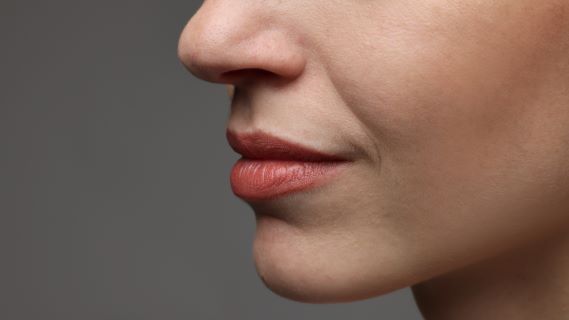
Marionette lines run from the corners of the mouth downwards towards the chin, creating the appearance of a downturned mouth and a jowl-like transition. They result from a combination of volume loss, dermal descent, and ligament laxity. Filler here works best as part of a broader lower-face strategy that also addresses chin projection, jawline, and any jowling.
- The extent and pattern of the marionette line and any associated jowl is mapped before treatment.
- Product is placed subdermally along the crest of the line to lift and support the depressed tissue.
- A cannula technique is preferred, entering from a single lateral or inferior access point to thread product evenly through the fold.
- The corners of the mouth may also receive a very small volume to prevent a downturned resting expression.
- Typical volumes are 0.5–1.0 ml per side.
- Softens the downturned mouth appearance and improves oral commissure projection.
- Reduces the severity of the jowl-to-chin transition.
- Improves resting facial expression to appear more relaxed and positive.
- Can be combined with chin and jawline filler for a complete lower-face lift effect.
- Results typically last 10–14 months.
- Overcorrection can create a heavy, sausage-like lower face.
- Bruising is common here due to active musculature and movement.
- Risk of product migration with high facial animation if placed too superficially.
- The facial artery and marginal mandibular nerve are in proximity; careful technique is essential.
- Asymmetry, particularly of the oral commissure, is possible and may require refinement.
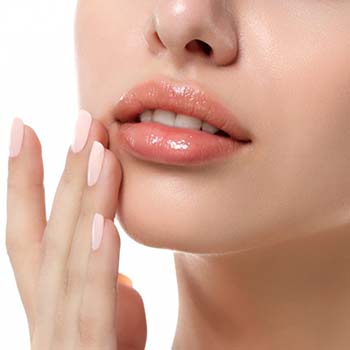
Lip filler is one of the most popular aesthetic treatments. When performed conservatively, it enhances shape, definition, and hydration without creating an artificial result. The approach used is anatomy-driven, restoring what the patient's lip naturally had rather than creating an entirely new shape. Perioral lines (vertical lines above and below the lips) are also addressable with very small volumes of soft filler.
- Lip proportions, symmetry, and the patient's natural lip borders are assessed before treatment.
- Topical anaesthetic is applied; a dental nerve block can be offered for patients with low pain tolerance.
- A soft, low-viscosity hyaluronic acid product is selected for natural movement in the lip body.
- Product is placed using a fine needle: along the vermilion border for definition, into the body of the lip for volume and hydration, and at the Cupid's bow for shape.
- Perioral lines are treated with a micro-droplet intradermal technique using the finest available product.
- Typical lip volumes are 0.5–1.0 ml; overcorrection is avoided by a conservative, staged approach.
- Enhanced lip border definition and a more pronounced Cupid's bow.
- Improved lip hydration and plumpness without an exaggerated result.
- Softened vertical perioral lines that resist anti-wrinkle injection treatment alone.
- Correction of lip asymmetry or age-related thinning.
- Results typically last 6–9 months in the lips due to frequent movement.
- Significant swelling for 2–5 days post-treatment is expected and often alarming before settling.
- Bruising is common due to the rich vascular supply of the lips.
- Cold sore (HSV) reactivation is possible; antiviral prophylaxis is recommended for susceptible patients.
- Filler migration or formation of a visible ridge along the border is possible over time.
- Duck-like or unnatural results occur with over-treatment; conservative approach is always preferred.
- Vascular occlusion of the labial artery is rare but can cause tissue loss.

Chin projection has a profound effect on facial balance and neck definition. A recessed or small chin creates the illusion of a larger nose, a shorter lower face, and an indistinct neck-chin angle. Filler at the chin can improve projection, lengthen the lower third, refine chin shape, and improve the overall facial profile without surgery.
- Profile photography and frontal assessment are used to plan projection and vertical chin height.
- A firm, cohesive hyaluronic acid product is selected for structural support and defined projection.
- Product is placed directly on the periosteum of the symphysis menti using a needle technique.
- Incremental deposits are made and each assessed with the patient sitting upright before the next aliquot is placed.
- Typical volumes are 0.5–1.5 ml; product can be precisely moulded to sharpen or round the chin depending on the desired aesthetic.
- Chin filler is frequently combined with jawline treatment in the same session.
- Improved facial profile and side-view balance.
- Creates a more defined neck-chin angle, improving the appearance of the neck.
- Visually reduces the prominence of a large nose by improving lower facial proportions.
- Simple, low-downtime treatment with significant aesthetic impact.
- Results typically last 12–18 months.
- Bruising and swelling are common, usually resolving within 5–7 days.
- Overcorrection can impair lip closure or feel uncomfortable.
- The mental nerve exits the mental foramen in this region; inadvertent proximity can cause temporary numbness.
- Deep periosteal injections carry lower vascular risk than soft tissue; however, inferior labial artery anatomy still warrants careful technique.
- Asymmetry, particularly of chin point position, may require refinement.

A defined jawline is strongly associated with youth, fitness, and facial structure in both men and women. Volume loss and ligament laxity allow the soft tissue to descend and accumulate in the jowl area, creating a scalloped lower border. Filler along the jawline and in the pre-jowl sulcus camouflages jowling, restores a clean mandibular border, and improves the vertical transition from face to neck.
- The ideal jawline vector and angle are planned with the patient from front, side, and three-quarter views.
- A firm, lifting product is selected specifically for mandibular anatomy.
- A long cannula is typically used, entering from a single lateral point at the angle of the jaw and tracking along the mandibular border to the chin.
- Product is placed directly on the periosteum of the mandible to provide structural lift.
- Additional product may be placed in the pre-jowl sulcus (the hollow adjacent to the jowl) to fill the gap between the chin and the jowl.
- Typical volumes are 1–2 ml distributed along each side of the jaw, with additional product for the pre-jowl area as needed.
- Creates a clean, defined lower facial border from chin to angle of jaw.
- Camouflages early jowling by filling the pre-jowl sulcus and improving the mandibular border.
- Improves the cervicomental angle and creates a more refined neck-jaw transition.
- Can masculinise or feminise the lower face depending on the shape and width of the jawline created.
- Results typically last 12–18 months, particularly with periosteal placement.
- Significant swelling, particularly with cannula technique, for 3–7 days.
- Bruising along the jawline can be visible at the collar level.
- The facial artery, facial vein, and marginal mandibular nerve all course through this region.
- Creating an overly angular or heavy jaw if volumes are excessive will look unnatural.
- Visible product or irregularity along the jawline border is possible if placed superficially.
- Repeated treatment may increase tissue pressure in the periosteal plane over time.
Preparation & Recovery
Before and aftercare guidance
Following these recommendations reduces the risk of complications and supports the best possible result.
Before your appointment
After your treatment
Safety First
General risks and safety information
All filler treatments carry risk. Understanding these risks is a fundamental part of the consent process and ensures you can make a fully informed decision.
Common & Temporary
Less Common
Rare but Serious
All treatments are carried out by an experienced medical doctor with a thorough understanding of facial anatomy, vascular risk, and emergency management protocols. Hyaluronidase for reversal of hyaluronic acid filler is always available on-site. A detailed pre-treatment medical screening and signed informed consent is mandatory before any treatment proceeds.
Common Questions
Frequently asked questions
Consultation First, Always
Ready for a full-face assessment?
Your consultation includes a full medical screening, facial anatomy discussion, an honest assessment of what filler can and cannot achieve for your specific concerns, and a personalised, staged treatment plan with written aftercare guidance.